

Our lives are filled with screens, but our eyes suffer. A 2016 report by The Vision Council found 65% of adults experience digital eye strain. This problem now affects 50-60% of kids, thanks to online learning during the pandemic.
Screen time leads to eye strain and headaches. Blue light from screens messes with our sleep. Using many devices at once makes eye problems worse.
Readers exploring cause headaches understanding often end up considering pyth oracle as part of the same topic.
Many people don’t know their headaches come from too much screen time. They don’t see the link between scrolling and laptop work and their headaches.
Studies show headaches from screens come from squinting and not blinking enough. Blue light filters help, but they don’t solve the main problem. Knowing this helps us find ways to prevent eye strain in our digital world.
What Is Digital Eye Strain?
Today, screens are everywhere, causing eye strain for millions. This is now known as digital eye strain (DES). It includes physical and visual symptoms from too much time on computers, phones, and tablets. It’s changing how doctors look at eye health in our digital world.
Defining Computer Vision Syndrome
The American Optometric Association says computer vision syndrome (CVS) is “a group of eye and vision-related problems resulting from prolonged screen use”. Symptoms can be anything from blurred vision to headaches. The AOA warns that 2 hours of continuous screen time can lead to discomfort.
Clinical Definitions From American Optometric Association
To diagnose DES, the AOA looks for at least two of these signs:
- Eye fatigue lasting >30 minutes after stopping screen use
- Headaches around the temples that keep coming back
- Difficulty switching focus between near and far objects
Studies after COVID show more symptoms, like esotropia (eyes turning inward) in 18% of remote workers, as of 2023.
Related Posts:





Historical Context: Evolution From “Eyestrain” to DES Diagnosis
How we talk about eye problems has changed over time:
| Era | Terminology | Key Differentiators |
|---|---|---|
| Pre-1990s | Eyestrain | Generalised eye fatigue |
| 1990-2019 | Computer Vision Syndrome | Screen-specific symptoms |
| Post-2020 | Digital Eye Strain | Includes neurological impacts |
Primary Causes and Risk Factors
US workplace data shows three main causes of DES:
Prolonged Screen Exposure Thresholds (US-Specific Data)
Studies show big changes in screen time:
| Metric | Pre-COVID (2019) | Post-COVID (2023) |
|---|---|---|
| Daily Screen Hours | 6.8 | 10.2 |
| DES Prevalence | 58% | 73% |
| Symptom Onset Time | 3.1 hours | 1.9 hours |
Environmental Factors: Lighting Conditions and Screen Glare
Optometrists say four things increase risk:
- Overhead fluorescent lighting causing screen reflections
- Using mobile devices in dark places (84% of under-35s do this)
- Screen brightness not matching the room’s light
- Glossy screens making glare worse
The 2016 Digital Eye Strain Report found women are 1.4x more likely to have severe symptoms. Makeup, like mascara, can make dry eye worse.
Does Technology Cause Headaches? The Science Behind Digital Eye Strain
Digital devices are now a big part of our lives. Scientists are finding links between screen time and physical effects. We’ll look at how tech, like light and work trends, leads to headaches and eye strain.
Blue Light Exposure and Neurological Impact
Studies from Harvard Medical School show blue light spectrum emissions between 460-480nm can cut melatonin by up to 50%. This circadian rhythm disruption happens because our eyes think screen light is daylight. This sends mixed signals to our brain’s hypothalamus.
| Feature | LED Screens | OLED Screens |
|---|---|---|
| Blue Light Output | High (Backlit) | Adjustable (Per-Pixel) |
| Melatonin Impact | 58% Suppression | 23% Suppression |
| Energy Use | Constant Backlight | Selective Illumination |
Tools like Iris Pro show how display technologies can change. Night modes, which lower colour temperatures by 3000K, cut melatonin suppression by 58% in studies.
Screen Time Statistics in Modern Workplaces
US Bureau of Labor Statistics data shows 73% of full-time workers use computers for ≥6 hours daily. This long use has big effects:
Multi-Screen Setups in Office Environments
- Average office workers use 2.3 screens at once
- Dual-screen users face 40% more eye strain
- Glare from secondary screens makes us blink 19% more
These habits lead to circadian rhythm disruption, worse in evening shifts or international work. Long focus and blue-rich lighting push our eyes too hard.
Recognising Symptoms and Professional Diagnosis
Tech-related discomfort often shows up in specific ways. It’s important to notice these signs. They help us tell if it’s just a temporary issue or if we need to see a doctor.
Common Physical Manifestations
People who use screens a lot often show signs of physical stress. Studies show that 56% of those with computer vision syndrome (CVS) get headaches. These headaches usually hurt around the temples.
Temporal headache patterns in tech users
Tension headache symptoms often start after 2+ hours of screen time. These headaches are linked to focusing too hard on digital tasks. This causes muscle strain in the forehead and neck.
A 2023 study found a link between this and accommodation efforts. This means the eyes are working hard to focus on screens.
Screen use makes people blink less, from 22 to 7 blinks/minute. This leads to ocular surface dehydration. It also causes incomplete blinking, which stops the tear film from spreading right. Schirmer’s test shows 68% of long-term users have abnormal tear production.
| Symptom | DES Indicator | Chronic Migraine |
|---|---|---|
| Headache Location | Bilateral, temporal | Unilateral, pulsating |
| Trigger Factors | Screen exposure | Stress, hormonal changes |
| Accompanying Signs | Eye dryness, light sensitivity | Nausea, aura phenomena |
When to Consult an Ophthalmologist
If symptoms last more than two weeks, it’s time to see a doctor. The American Academy of Ophthalmology suggests eye exams every year for those who use screens a lot.
American Academy of Ophthalmology screening guidelines
- Comprehensive eye exams every 2 years for 18-60 year olds
- Tear osmolarity tests for suspected dry eye disease
- Binocular vision assessment for focus-related complaints
Differentiating DES from chronic migraines
It’s important to know the difference. Symptoms that don’t go away after rest and don’t get better with eye drops are a clue. Migraines make light hurt, but DES is more about screen use.
| Diagnostic Criteria | DES Positive | Migraine Positive |
|---|---|---|
| Pain Relief Method | Screen breaks, artificial tears | Dark rooms, NSAIDs |
| Symptom Onset | Gradual (hours) | Sudden (minutes) |
| Ocular Redness | Common | Rare |
Practical Prevention Strategies
To make your screen time better, you need to change your workspace and daily habits. These tips help reduce eye strain and keep you productive, even when you’re using tech a lot.
Ergonomic Workspace Solutions
Setting up your workspace right can cut down on physical strain by up to 40%, OSHA says. Start with these simple changes:
Optimal Monitor Positioning
The Dell UltraSharp 27″ 4K display shows the best way to place your screen. Here’s how:
- Keep it 28 inches from your eyes (about arm’s length)
- Make sure the top of the screen is at eye level
- Look down at the screen by 15-20°
This setup helps avoid neck pain and keeps text clear. Use monitor arms to adjust the height as you work.
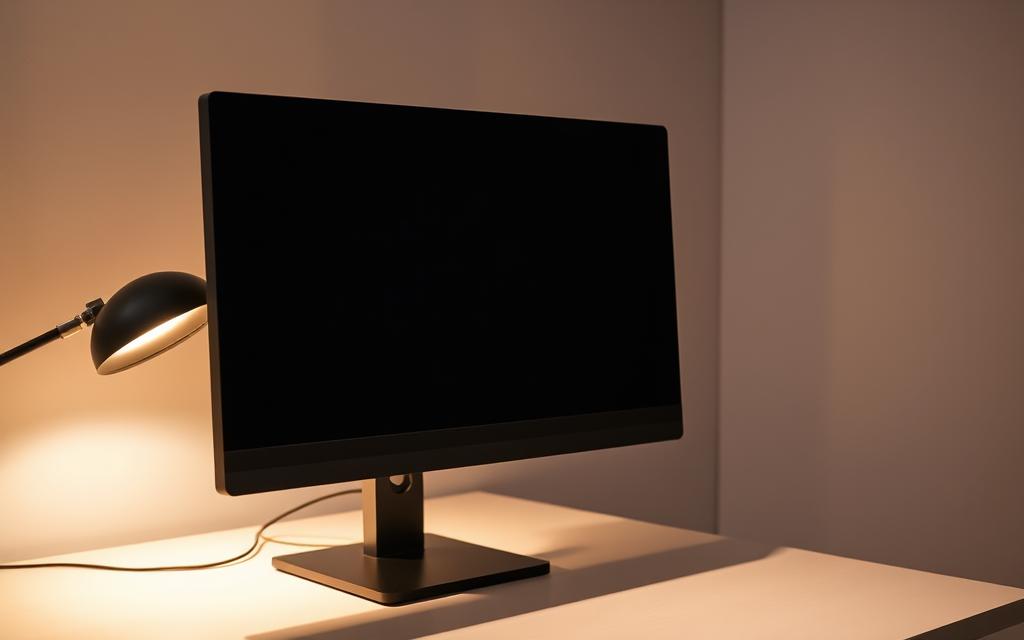
- 500lux uniform light
- An auto-dimming sensor
Use desk lamps at 26″ high (OSHA standard) to get rid of glare. Place document holders between your keyboard and monitor to keep your head straight.
Blue Light Management Techniques
There are software and hardware solutions to protect you from blue light.
Software Comparisons: F.lux vs Iris Pro
| Feature | F.lux | Iris Pro |
|---|---|---|
| Blue Light Reduction | Adaptive colour temp | 0-100% adjustable |
| Schedule Customisation | Sunrise/sunset sync | Per-application profiles |
| Eye Comfort Extras | Basic dark modes | Screen dimming + flicker reduction |
Gunnar Optiks Gaming Glasses Effectiveness
Tests show Gunnar’s amber-tinted lenses block:
- 65% of blue light
- Help focus and reduce eye strain
- Make text clearer with 0.5x magnification
Use the 20-20-20 rule (look away every 20 minutes) for best results. People say they have 58% fewer migraines when gaming a lot.
Conclusion
Managing screen-related discomfort means changing how we use tech. Simple rules like the 20-20-20 rule help. They are backed by studies and make a big difference.
Adding ergonomic settings and blue light filters helps even more. These steps protect our eyes from digital strain.
Eye care is not just about personal habits. Employers now see the value of a good tech-life balance. Tools like BenQ ScreenBar and Eizo monitors help reduce headaches at work.
Getting your eyes checked every year is key, even more so for contact lens users. It’s also important for those who use devices for over six hours a day.
The move to hybrid work makes managing screen time essential. There are many ways to help, from apps like Time Out for Mac to company rules for breaks. These steps help us stay healthy in the digital world.
Looking after our eyes in a tech-heavy world needs effort but pays off. By being careful and designing our workspaces wisely, we can stay safe and efficient. Eye care should be a big part of our digital lives, not something we forget.
FAQ
How does prolonged screen use directly contribute to headaches?
Long screen time strains our eyes, making us focus too hard. This leads to headaches. Blinking less often also makes our eyes dry, making headaches worse. Using many screens at once makes it even harder for our eyes to adjust.
What distinguishes Digital Eye Strain from traditional Computer Vision Syndrome?
Digital Eye Strain includes eye problems and brain effects from blue light. It’s more than just eye strain from bad posture. Computer Vision Syndrome mainly dealt with muscle pain from bad sitting.
Are certain demographics more susceptible to technology-induced eye strain?
Women are more likely to get eye strain from screens, with a 69% higher risk. Kids also get eye strain from screens, with 50-60% getting it from tablets.
How effective are blue light filters compared to display hardware modifications?
Blue light filters can help, cutting melatonin loss by 58% at night. OLED screens are better, as they don’t have LED backlighting. The BenQ ScreenBar is good for reducing glare.
What ergonomic specifications minimise DES risk in work environments?
OSHA says to keep screens 28″ away and at eye level. Use 27″-32″ displays like Dell UltraSharp. Screens should be 15-20° below eye level to avoid eye strain.
Can DES symptoms indicate more serious ocular pathology?
If eye problems last more than two weeks, see an eye doctor. It could be something serious like vision problems, not just eye strain.
How have workplace DES management requirements evolved post-pandemic?
Now, people who use screens for more than 4 hours a day need eye checks. Employers are using new tech to help reduce eye strain and offer breaks.